
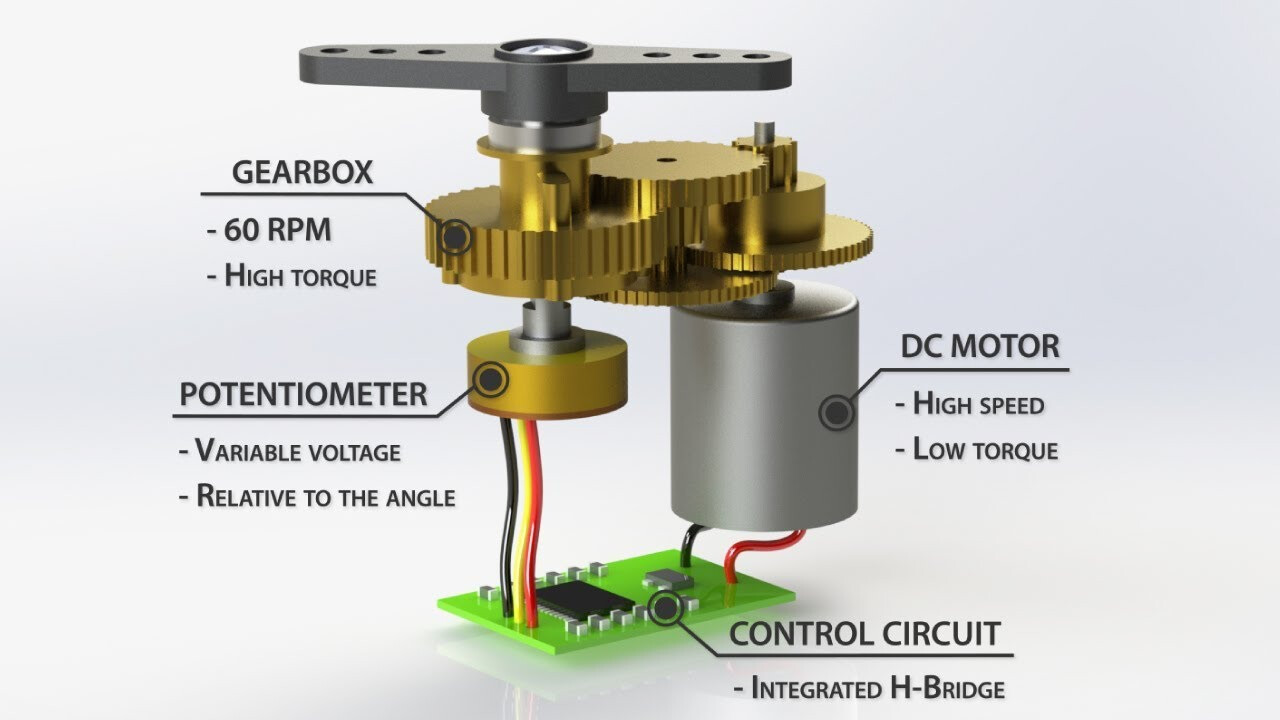
Choosing between a standard and servo potentiometer isn't just about price — it's about matching engineering specifications to the physical reality of your application. Here's how to decide.
Imagine an automated high-speed production line. For weeks, it runs flawlessly, but gradually the system begins to drift. Tiny inaccuracies in mechanical feedback compound until the entire line shuts down for recalibration.
The culprit? A standard potentiometer was installed in a high-cycle environment where only a servo potentiometer could withstand the mechanical demands.
Choosing between these two components isn't just a matter of price — it's about matching the engineering specifications to the physical reality of your application.
The Baseline: What is a Standard Potentiometer?
A standard potentiometer is primarily designed for Human–Machine Interface (HMI) tasks. Think of the volume knob on a stereo or the speed control dial on a basic motor controller. These devices are optimized for manual adjustment rather than continuous automated motion.
- 1Mechanical Limits: Most standard potentiometers have a physical stop that limits rotation to roughly 270° to 300°.
- 2Friction & Feel: These units typically use sleeve bearings or plastic bushings. This creates a level of friction that feels natural to a human hand but can cause unnecessary load on a delicate motor system.
- 3Accuracy: Typical linearity ranges from 1% to 5%, which is perfectly adequate for manual adjustments but insufficient for precision closed-loop control systems.
What Makes a Servo Potentiometer Different?
When a potentiometer is designed to be driven by a motor rather than a human, it enters the servo class. This is where mechanical precision and durability become critical. Servo potentiometers are specifically engineered for continuous motion, high cycle counts, and extremely accurate position feedback.
- 1Continuous 360° Rotation: Unlike standard potentiometers, servo potentiometers do not have internal mechanical stops. They can rotate continuously, allowing them to track circular motion without damaging the internal wiper mechanism.
- 2Ultra-Low Torque: Servo pots use precision ball bearings and stainless steel shafts, dramatically reducing starting torque. This prevents the sensor from "dragging" on the motor or robotic joint it is monitoring.
- 3Extreme Linearity: While a standard pot may be "good enough," servo potentiometers are built for high-accuracy feedback. Linearity can reach ±0.5%, ensuring the electrical output precisely reflects the mechanical position.
Head-to-Head Comparison
| Feature | Standard Potentiometer | Servo Potentiometer |
|---|---|---|
| Rotation Limits | Fixed stops (≈300°) | Continuous 360° |
| Bearing Type | Sleeve / Bushing | Precision Ball Bearings |
| Shaft Material | Often plastic or brass | Stainless steel |
| Linearity / Accuracy | ~1% – 5% | ±0.05% – 0.5% |
| Lifespan | Low to moderate | Very high (millions of cycles) |
Common Industrial Applications for Servo Potentiometers
Because of their durability and precision, servo potentiometers are widely used in closed-loop industrial control systems where reliability is critical and human interaction is minimal.
- 1Valve Positioning: Providing precise feedback on how far a flow-control valve is open, ensuring accurate process control in chemical plants, water treatment facilities, and oil refineries.
- 2Dancer Tension Control: Monitoring the position of a dancer arm to maintain constant tension in processes involving paper, film, foil, or wire — critical in printing, packaging, and cable manufacturing.
- 3Robotic Joint Feedback: Serving as the position sensor in robotic joints, allowing the controller to know the exact location of an arm or actuator in three-dimensional space.
Final Thoughts
- 1Standard potentiometers are ideal for manual adjustments and simple interfaces where cost efficiency matters most.
- 2Servo potentiometers are essential for motor-driven systems that require continuous motion, low friction, and precise feedback.
- 3In high-cycle industrial environments, choosing the correct device from the beginning can mean the difference between years of reliable operation and frequent system recalibration or failure.